
You pack up your entire life, watch it disappear into a metal box, and then wave goodbye as the truck pulls away. From the very beginning, when international movers arrive at your door, the whole journey feels like handing over control.
But what actually happens after that container leaves your driveway? Where does it go? When does it get on a ship? Most families moving overseas don’t know what their household goods go through between pickup and final delivery.
We’ve coordinated hundreds of international moves at HomePort NorthWest. In this article, we’re walking you through every step of overseas container shipping: the depot, customs clearance, and delivery day.
By the end, you’ll know exactly where your belongings are and what’s happening behind the scenes.
What Happens on Pickup Day?
Pickup day is when international movers arrive, pack your household goods, load the container, and seal it for overseas container shipping. The operation moves fast, but there are three main stages before your container actually leaves for the port:
International Movers Pack Your Household Goods
Your moving crew shows up with boxes, wrapping materials, and a checklist of everything that needs protecting. Professional packing means the crew wraps furniture, puts fragile items into reinforced shipping boxes, and labels everything for the long journey ahead. Once they’re done, you’ll get an inventory list, so you know exactly what’s going into your container.
Container Loading and Inventory Check
In our experience with hundreds of international moves, the loading strategy counts way more than people think. International moving specialists place heavy items at the bottom, secure everything with straps and padding, and make sure nothing shifts during transport.
The final inventory check happens before sealing. This is when you confirm nothing’s missing or damaged before the shipping container leaves your property. After that, movers seal it with a customs lock that stays on until it reaches the destination country.
First Stop: The Depot
Even though your container leaves your driveway, it doesn’t head straight to the port as most people think. Your sealed container goes to a holding depot where it waits for the next available ship.
Depot staff process customs paperwork here, along with shipping manifests and documentation for overseas shipping. And depending on international shipment schedules, containers can sit for a few days or even weeks before moving to the port.
How Does Overseas Container Shipping Actually Work?
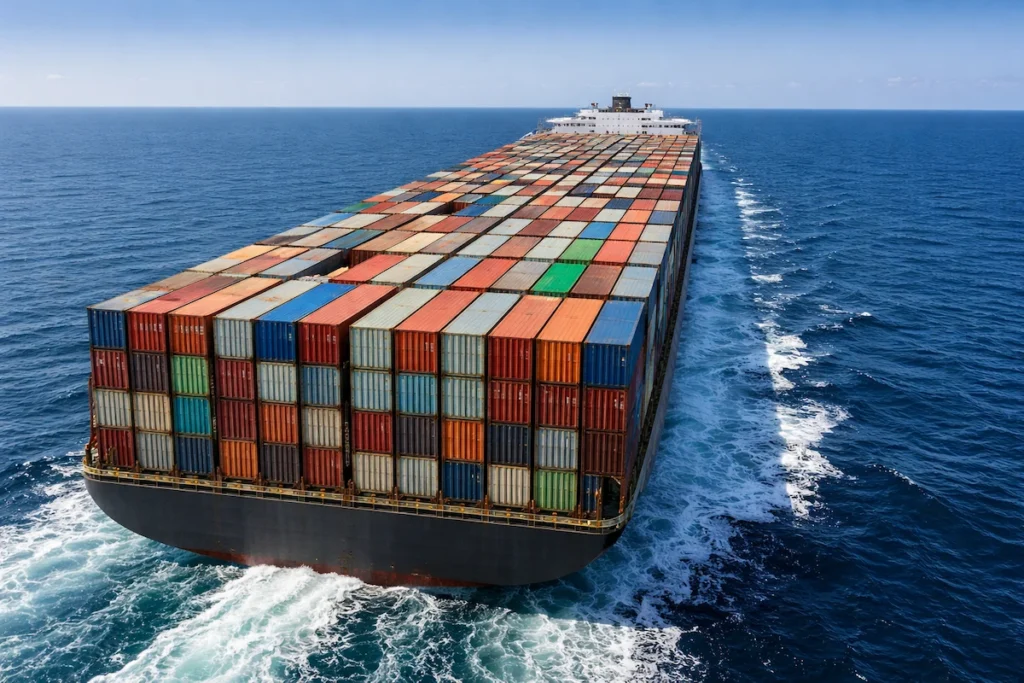
Overseas container shipping moves your household goods by cargo ship on established international routes that connect major ports worldwide.
Put simply, your container joins thousands of others on huge cargo ships that follow set schedules between continents. These ships stop at major ports along the way, but they stay sealed the entire journey.
Behind the scenes, the global network of international shipping companies coordinates timing so containers get transferred efficiently at each port. Meanwhile, GPS and real-time tracking systems let the moving company monitor your household goods throughout the ocean crossing.
And during transport, ships carry goods overseas using a precise grid system where containers stack securely in the cargo hold.
Based on our experience, most international routes take anywhere from four to eight weeks, depending on the origin and destination. Once the ship reaches your destination port, port workers unload the container and move it into the customs clearance queue.
But before we get to customs, there’s an important choice that affects your timeline.
Air Freight vs Sea Freight: Which Route Does Your Container Take?
Most international moving services use sea freight for full household moves, while air freight handles smaller urgent shipments. The table below breaks down how these two shipping methods compare:
| Factor | Sea Freight | Air Freight |
| Speed | 4-8 weeks transit times | 3-7 days for fast delivery |
| Cost | Most cost–effective shipping method | Significantly higher per kilo |
| Best For | Full container loads, larger shipments | A few boxes, urgent items only |
| Weight Limits | Can transport large volumes with no restrictions | Weight limits drive up costs for full moves |
At the end of the day, most families choose sea freight for international relocation because it’s cheaper and handles full households without weight penalties. On the flip side, air freight works when you need documents, essentials, or small items to arrive quickly while your main shipment follows by sea.
The shipping method you pick changes your budget and timeline. So if you’re moving your entire home, sea freight makes the most sense. Your container travels more slowly, but it carries everything you own for a fraction of air freight costs.
What’s Happening While Your Container Crosses Oceans?
Your container sits secure in the ship’s cargo hold while crews monitor conditions and coordinate arrival schedules.
As we already mentioned, inside the cargo hold, containers stack in a precise grid pattern. So the weight distributes evenly across the ship’s structure and reduces the risk of tipping.
Also, the ship’s locking system prevents shifting when rough weather hits. Crew members monitor temperature and humidity to protect household items from damage throughout the long voyage.
Meanwhile, the global network of moving services tracks your international shipments in real time. This system coordinates timing so it reaches the right port and clears customs on schedule. The goal is to make sure everything arrives home safely without delays.
Customs Clearance: The Checkpoint You Can’t Skip
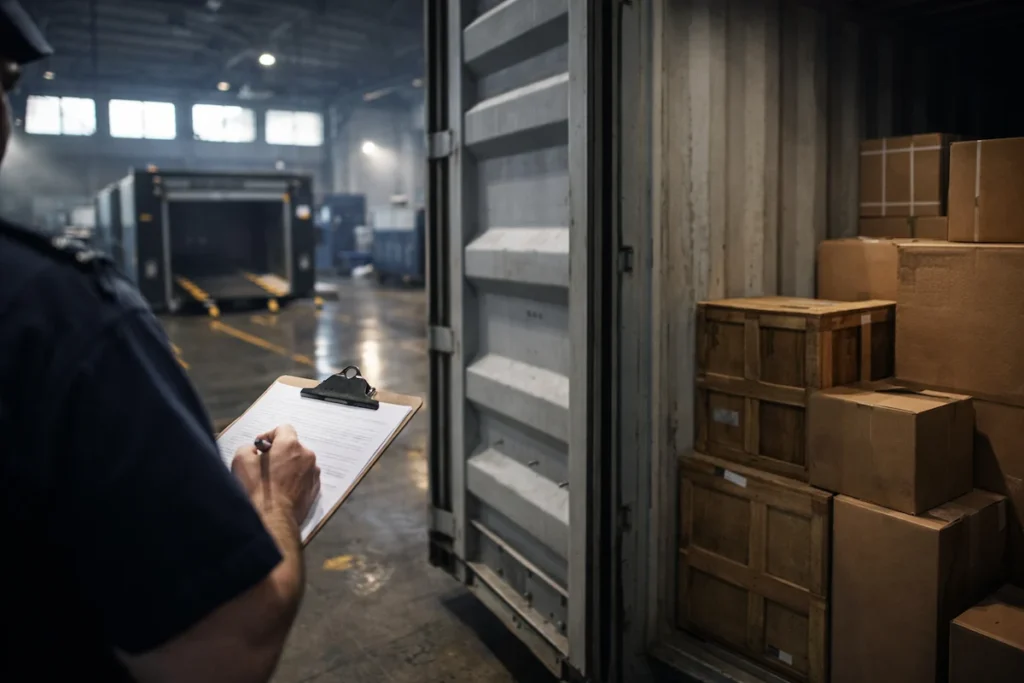
While your container’s travelled thousands of kilometres, it won’t reach your door until customs officers finish their inspection. They usually take anywhere from a few days to several weeks, depending on workload and what they find.
Here’s what happens at this checkpoint:
Why Customs Flags Dangerous Goods
Dangerous goods include batteries, aerosols, cleaning products, and other items that pose safety risks during international transport. Customs officials scan containers to detect prohibited goods that could explode, leak, or catch fire mid-ocean. That’s why your international movers should warn you about these customs regulations before packing day.
Worth Noting: Sometimes you’ll need extra paperwork like import permits and customs declarations proving items are for personal use rather than commercial import.
Documentation: What Your International Moving Services Handle
International moving services submit packing lists, inventory manifests, and proof of ownership to customs authorities in the destination country. Additional services like customs brokerage help speed up customs clearance by handling paperwork correctly the first time.
However, missing documents cause delays, so the moving services triple-check the entire process before the container arrives at customs. Having professionals manage customs requirements saves you weeks of back-and-forth.
Delays That Might Happen
Even with perfect preparation, customs delays happen for reasons completely outside your control. The most common holdups include:
- Random inspections can add days or weeks if customs officers decide to physically check your shipping container
- Incorrect customs paperwork or missing signatures mean the container sits in holding until someone resolves the issues
- Peak season congestion at ports slows down processing for everyone, regardless of preparation
Once customs gives the green light, your container finally moves to the local delivery network.
The Global Network Behind Your Move
International moving relies on partnerships between local movers, shipping companies, and destination delivery teams working across multiple countries.
The whole process depends on coordination between multiple companies that specialise in different parts of international shipping. Each handoff point has protocols to track your container and update the status in real-time systems.
In our experience, the global network of international removalists and relocation services keeps costs down because each international shipping company handles specific legs of the journey. Local expertise at each port means workers can process it faster than if one company tried managing everything overseas.
On the ground, an experienced team in your origin country packs the container, while partner companies with global reach handle customs and final delivery. This system works because international moving services share tracking data across borders.
Final Delivery: Getting Your Container to the Door
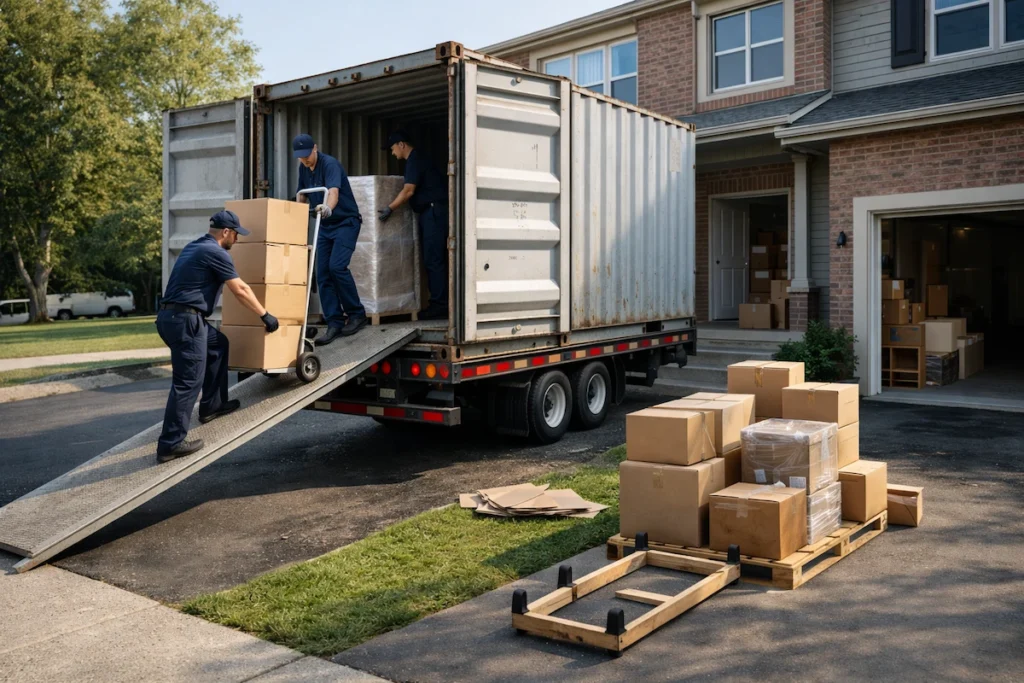
After your container clears customs and arrives at the destination port, the final leg of your journey begins. Let’s look at what happens when your belongings finally reach your new home:
Unpacking and Additional Services
An expert team brings the container to your new address and unloads everything into your new house. If you want help beyond delivery, many international movers offer unpacking services where they’ll unbox household items and place them in rooms.
You can also request furniture assembly or debris removal as additional services for extra fees. In a nutshell, relocation services handle the heavy lifting so you can focus on settling in.
What If Something’s Damaged?
Finding a cracked mirror or dented furniture after overseas container shipping is frustrating, but there’s a process for this. Check everything as the crew unloads it and note any damage on the delivery paperwork immediately.
We’ve found through hands-on work that most international moving services include basic insurance, but you’ll need to file claims within set timeframes (usually 7-30 days after delivery).
Helpful Tip: Take photos of your items on packing day. They help prove damage happened during transit rather than before the move.
Is Overseas Container Shipping Cost-Effective?
Families worry about the price tag, but overseas container shipping often costs less than you’d spend shipping items individually. And fortunately, most international removals companies in Australia offer shipping solutions that fit different budgets.
In practice, cost-effective international relocation depends on your service level and how much you’re moving. If you’re moving a full home overseas, container shipping gives you the best value. Full container loads spread the cost across all your household goods, so you pay one flat rate instead of per-item or per-kilo charges.
But if you’re only shipping a few boxes or personal effects, consolidation might work better. Sharing container space with other shipments cuts costs but adds handling and potential delays.
Pro Tip: Look for transparent pricing with no hidden surprises or extra costs to make the entire experience more stress-free.
When you factor in packing, transport, and delivery, international removals through container shipping beat flying personal effects separately.
Ready to Ship Your Life Overseas?
Now you know exactly what happens to your container from the moment international movers load it until final delivery at your new home. The process involves more coordination than most families expect, but that’s why working with international moving specialists makes such a difference.
Moving overseas doesn’t have to feel overwhelming. When you choose a company with extensive experience in international moving, you get expert guidance at every stage.
Honestly, great service means staying informed without the stress, whether it’s packing day, customs clearance, or unpacking at your new address. What’s more, dedicated customer support keeps you updated on where the container is and what’s happening next.
Ready to start planning your move from Australia? HomePort NorthWest handles international moving with transparency, so you know exactly what to expect.
Get in touch, and we’ll walk you through the entire process.