
Most people planning an international move focus on the obvious costs: the shipping container, flights, and the first month’s rent. It’s only after everything is arranged that the rest shows up, such as visa fees, insurance gaps, and currency transfers at the wrong rate. None of it is surprising in hindsight, but by then the budget has already been locked in.
The reason it catches people out isn’t carelessness. Moving overseas spreads costs across so many categories that no single quote or conversation ever shows you the full picture. Each expense looks manageable on its own, but put together, they form a total that’s often higher than anticipated.
This guide breaks down the cost of moving overseas, so you can plan your move with clear, realistic numbers to back you up.
Let’s get into it.
What Does It Actually Cost to Move Overseas?
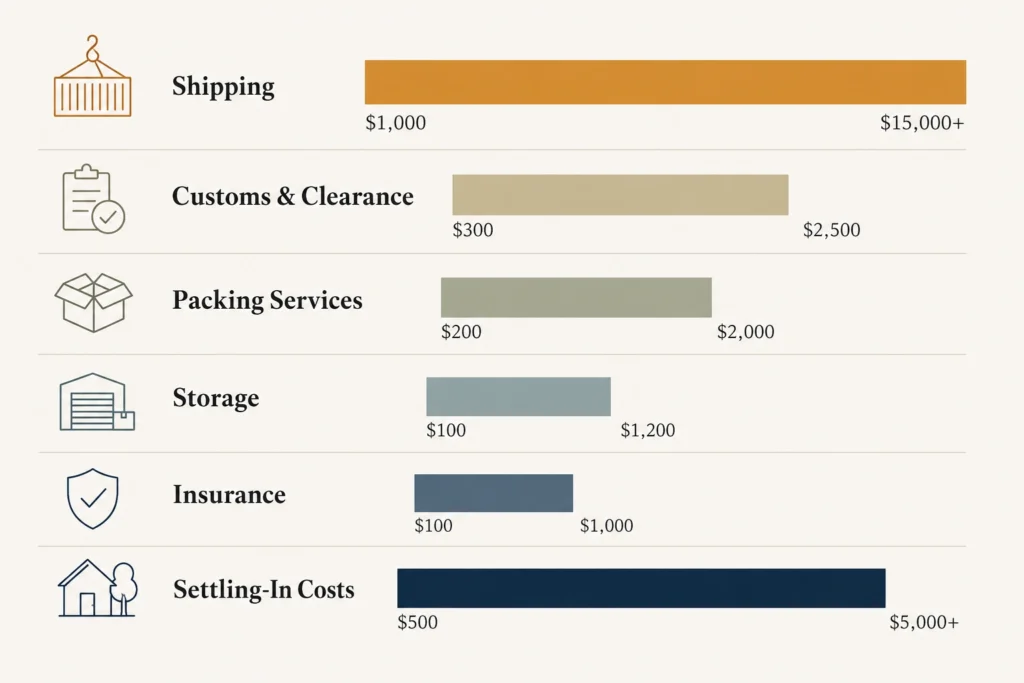
The estimated cost to move internationally sits anywhere between $3,000 and $15,000, depending on shipment size, destination, and the services you need. The table below breaks down the main costs involved so you have a realistic starting point before collecting quotes.
| Cost Category | What It Covers | Estimated Cost (AUD) |
| Shipping Costs | Sea or air freight, based on volume/weight | $2,000-$12,000 |
| Customs & Clearance | Import duties, clearance fees | $200-$1,500 |
| Packing Services | Professional packing and materials | $300-$1,500 |
| Storage | Short or long-term storage space | $100-$500/month |
| Insurance | Shipping insurance on declared value | $200-$800 |
| Settling-In Costs | Deposits, utilities, temp housing | $2,000-$5,000+ |
Shipping will usually account for the largest share of your moving cost, and it’s also where you have the most control. It’s because the volume you ship, your method (air or sea), and how much you outsource can move your total by thousands.
Most of the other costs in the table are either fixed or vary within a smaller range. That’s why it makes sense to start planning your move by deciding what you’re taking and how you want to ship it.
Shipping Your Belongings: Air Freight or Sea Container?
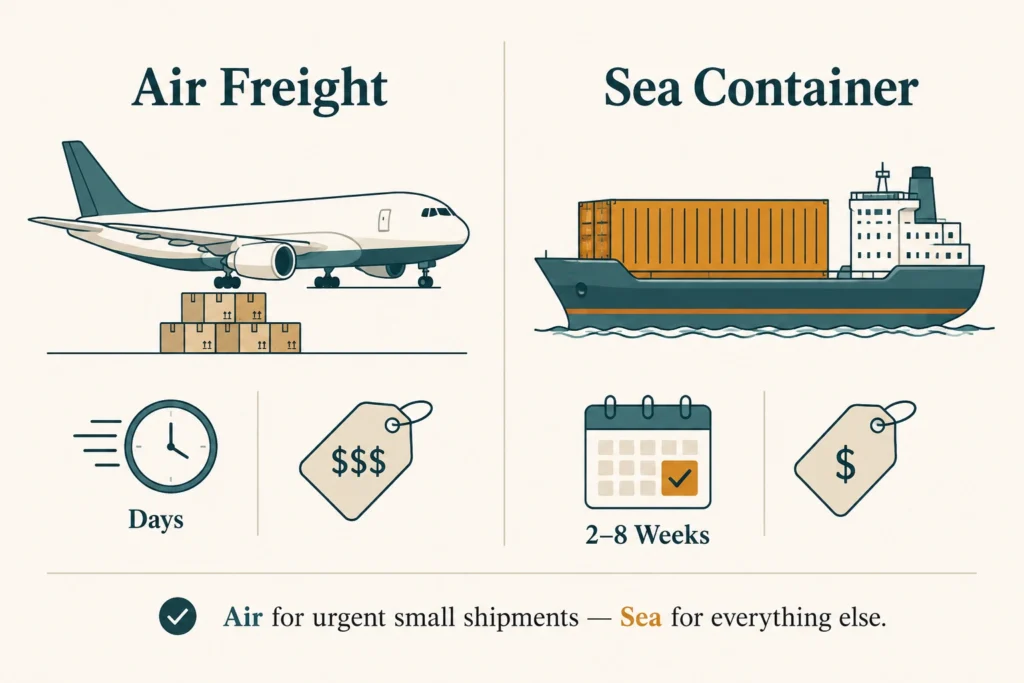
You can ship your belongings overseas in two ways: by air or by sea. The right shipping method depends on how much you’re moving and how quickly you need it delivered. Below, we break down both options so you can compare them side by side.
Air Freight: Fast but Pricey
Air freight gets your belongings there in days, but that speed comes at a cost premium most movers don’t fully account for. According to the World Bank, air freight is priced 12 to 16 times higher than sea transport, so it’s typically used selectively. Here’s what to expect:
- Works Best For: Smaller, urgent shipments under 100–150kg, such as important documents, electronics, or personal items you need immediately on arrival.
- Shipping Prices: Air freight rates generally range from $1.50 to $4.50 per kilogram. Airlines calculate costs using both actual weight and volumetric weight, so bulky but lightweight boxes can cost more than their actual weight suggests.
- Additional Fees: Fuel surcharges, handling fees, and airport clearance charges are common with air freight and can add noticeably to your final shipping costs.
For most people moving overseas, air freight works best as a supplement rather than a primary shipping method, particularly for larger shipments.
Sea Container: The Affordable Long Haul
For most Australians moving overseas, sea freight is the most cost-effective option once you’re shipping more than a few personal items. There are two container load options depending on your shipment size:
- Shared Containers (LCL): Your belongings travel with other shipments, and you only pay for the cubic metres you use. For smaller moves, this keeps costs down when a full container would be unnecessary.
- Full Container (FCL): You get either a 20ft or 40ft container to yourself. It generally makes more financial sense for larger household moves once you’re filling most of the available space.
- Transit Times: Sea freight takes anywhere from 2 to 8 weeks, depending on your destination country, so build that into your timeline before you book.
The longer transit time is the trade-off, but with enough planning, sea freight is where most movers keep their costs under control.
International Moving Costs Most People Forget to Budget For
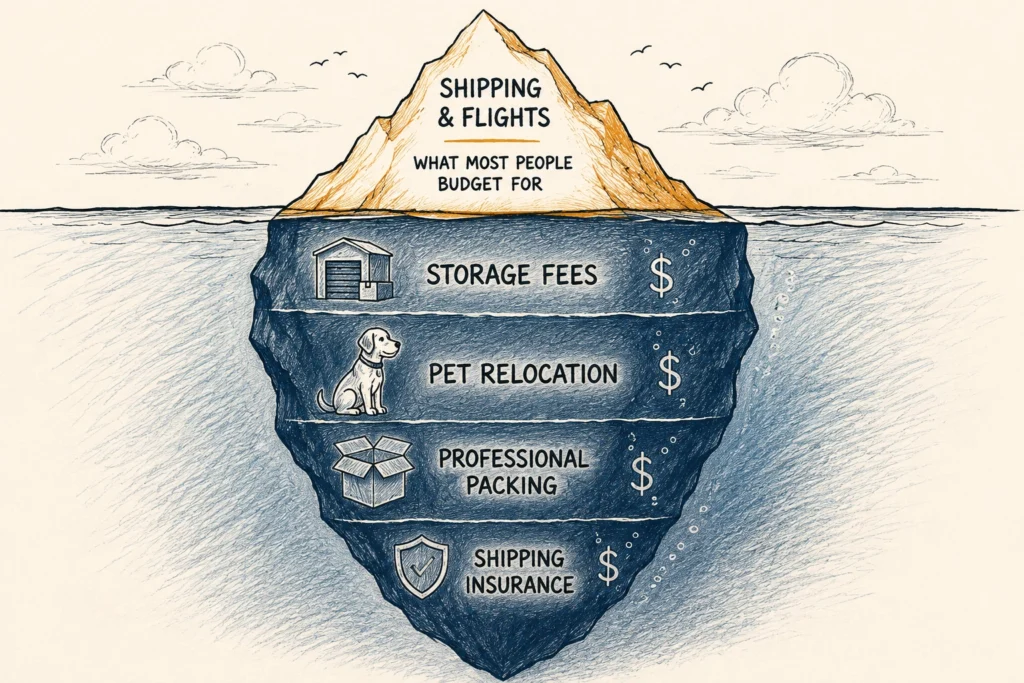
Most people budget for shipping and flights, then get caught off guard by a handful of costs that stack up before and after the move. These are the expenses that don’t show up in a standard shipping quote but still land on your bill:
- Storage Fees: If there’s a gap between your move-out and move-in dates, your belongings will need to go into short-term storage. This typically costs $100 to $500 per month, depending on volume and location.
- Pet Relocation: Pet relocation costs include vet checks, vaccinations, health certificates, and airline fees. In some cases, quarantine on arrival may also be required due to strict biosecurity laws in countries like Australia and New Zealand.
- Professional Packing: Some international removalists include packing in their quote, while others charge for it separately. If packing isn’t covered, professional packing services can add $300 to $1,500 to your total, depending on shipment size.
- Shipping Insurance: Most moving companies offer basic coverage, but it often doesn’t fully cover the declared value of your belongings. Taking out proper international shipping insurance ensures your items are fully covered.
On their own, these costs seem manageable. Together, they can add several thousand dollars to an already stretched budget. That’s why it’s worth mapping these costs early, alongside shipping, rather than treating them as afterthoughts.
How Your Destination Country Affects the Price
Say two people are moving overseas at the same time, shipping roughly the same volume of belongings. One is headed to London, the other to a mid-sized city in Southeast Asia. The second move will likely cost more (and not because of shipment size).
Distance is one of the main drivers. The further the destination, the higher the transport cost, simply because fuel, routing, and transit time all scale with distance.
Port accessibility is another factor. Moving into a major port city is relatively seamless. By contrast, reaching a regional destination often requires additional inland transport after arrival, which increases the total cost.
Customs requirements also add variation. Some countries process shipments quickly with minimal paperwork. Others require detailed documentation, permits, or inspections before anything is released, with each step adding time and fees.
Finally, there’s currency exchange. If you’re paying in a foreign currency, the rate at the time of transfer can move your total cost by more than you’d budgeted for. Even small fluctuations add up across large payments.
From our observations across international moves, currency timing alone can add $500 to $2,000 to the final bill, depending on transfer size and timing.
To reduce this risk, we suggest fixing your exchange rate early using a transfer service like Wise or OFX, rather than waiting until the payment date.
Settling In: The Costs That Hit After You Land

Picture this: the boxes have arrived, you’ve got the keys, and you think the hard part is over. In reality, the first few weeks in a new country are often some of the most expensive parts of the entire move, for several reasons:
- Security Deposit: Most landlords in popular expat destinations require two to three months’ rent upfront as a security deposit. That’s a high upfront cost before you’ve even unpacked, especially if you’re also paying for temporary housing while you look for a permanent place.
- Temporary Housing: If you’re moving abroad without a long-term rental locked in, short-term accommodation fills the gap. It can quickly become one of the most expensive parts of the transition, with serviced apartments and Airbnbs costing 50 to 100% more than standard rentals. The longer this phase stretches, the more it eats into your moving budget.
- Utilities and Local Registration: When you’re in a new country, you’ll often need to make upfront payments just to get the basics running. This includes utility connections, which typically require a deposit of around $100 to $300, as well as registration, residency permits, and visa-related fees.
- Health Insurance: Public healthcare isn’t always accessible to new arrivals, and in some countries, you’ll even need proof of private coverage to finalise your visa. So arranging health insurance in advance is essential for both your well-being and your budget.
The settling-in period is temporary, but the costs are very real. To avoid being caught short, build a buffer of 25 to 40% above your projected monthly living expenses. That way, you’ll have enough room to adjust without financial pressure in the early weeks abroad.
Ready to Plan Your International Relocation Budget?
Moving overseas is a big financial commitment, but it becomes much more manageable once you understand where the costs actually come from. The moves that stay on budget map out every cost early, before collecting quotes and making bookings
If you’re planning an international move and want a clearer picture of what it’s likely to cost, HomePort NorthWest can help. We work with Australians moving overseas and can help break down costs based on your specific situation.
Get in touch with our team today to start building a budget that holds.