
Container shipping takes weeks but handles full households affordably, while air freight delivers in days but costs far more per kilogram. Each has its strengths, and choosing between the two depends on your timeline, budget, and how much you’re actually taking, not just which sounds better on paper.
For example, if you’re relocating overseas permanently with furniture, you can plan around an 8-12 week container shipment. But if your job starts in just three weeks and you’re bringing only essentials, air freight may be the only practical choice.
This guide covers how container shipping and air freight compare on speed, cost, and capacity. You’ll also see when each method makes sense for moving overseas, and how some people combine both to balance convenience and budget.
Read on to learn more.
Container Shipping vs Air Freight: Speed, Cost, and Capacity

The main differences between container shipping and air freight come down to transit time, cost per kilogram, and how much you can send. Let’s take a closer look at each factor to see how these two methods compare.
Transit Times for International Moves
Container shipping typically takes 6-12 weeks door-to-door, depending on your route and destination. Ports tie up much of that time while containers go through customs inspections before and after the ocean voyage.
Air freight skips most of that waiting, so delivery usually happens in 1-3 weeks, even though the flight itself takes only hours.
Cost Comparison for Household Goods
Air freight typically costs 12-16 times more than sea freight, according to the World Bank. This is because planes carry far less cargo per trip, meaning more of your shipping cost goes toward the flight’s operating expenses.
Base rates also hide extras like port handling and customs clearance, which can add 30-40% to your final bill, no matter which method you choose.
Volume and Weight Limits
A 20-foot shipping container holds roughly 1,000 cubic feet, enough for furniture, appliances, and boxes from a full household of 2-3 bedrooms.
Air freight can’t match that capacity because airlines charge using volumetric weight rather than actual weight. The formula penalises anything bulky, so a lightweight couch costs more to fly than a compact bookshelf that weighs twice as much.
What Container Shipping Offers for Moving Overseas
Container shipping gives you the capacity and affordability to move full households without choosing between your belongings and your budget.
Here’s what makes it work for most international moves:
- Handles Full Households: Containers take furniture, appliances, and bulky items that airlines won’t accept as cargo, so you can bring your full home setup instead of starting over.
- Shared Container Services Save Money: You can book just the space you need and pay only for those cubic feet rather than renting an entire container. Moving companies achieve this by consolidating multiple customers’ personal effects into one container, then separating everything at the destination country.
- Cost Drops As You Ship More: The base shipping charge gets spread across everything you’re sending. No wonder shipping 500 cubic feet costs far less per item than shipping 100 cubic feet.
- Exclusive Containers Skip the Wait: Booking an entire container for yourself means your international shipments don’t get mixed with other people’s goods. This allows your container to move straight through customs as a single unit rather than waiting for other shipments to clear.
- Reaches More Places: Container routes cover virtually every international port. If you’re heading somewhere without a major airport, sea freight often gives you the only practical way to get your belongings there.
If you’ve got the time to plan around longer transit and enough volume to make it worthwhile, containers deliver the best value for moving overseas.
Air Freight Benefits for Your International Relocation
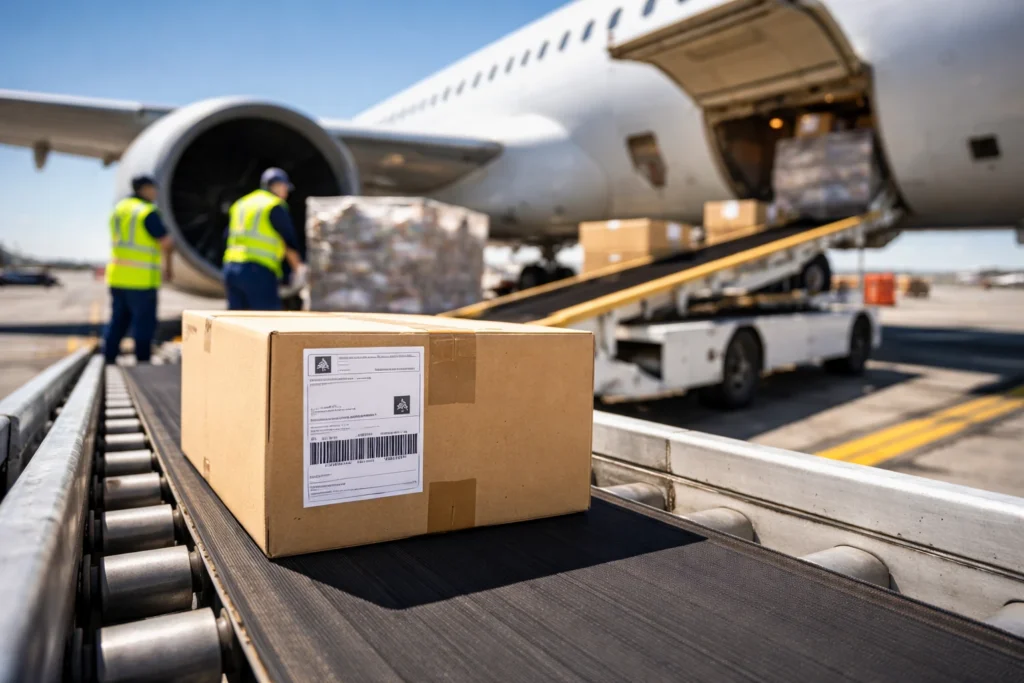
As we mentioned earlier, air freight is fast. It costs more than ocean shipping, but it gets your belongings to you much sooner. Other benefits include:
- Better Tracking and Visibility: Most airlines provide detailed tracking throughout the journey, so you know exactly where your shipment is at every stage.
- Climate-Controlled Protection: Air cargo holds maintain stable temperatures and humidity levels. As a result, electronics, musical instruments, and other sensitive items avoid the extreme swings that often occur inside ocean containers during long voyages.
- Fits Short-Term Relocations: Temporary assignments don’t justify the cost of shipping full household contents both ways. With air freight, you can bring essentials for 6-12 months without paying for round-trip container shipping.
If speed justifies the extra cost and you’re willing to be selective about what ships by air, air freight makes your international move smoother and faster.
Which Method Suits Your Moving Abroad Timeline?
As we mentioned before, it depends on how much lead time you have before you need to be functional in your new location.
If you’re planning an international move 2-3 months out, containers work perfectly. The longer timeline means you can schedule your shipment weeks before you book flights, so your belongings arrive shortly after you settle in.
But if you need to move within 4-6 weeks, port delays become a real headache. Your container could sit waiting for customs clearance while you’re living in an empty flat. That’s why people relocating internationally on tight schedules often choose air freight despite the higher cost because the delivery window is far more predictable.
Bottom line: The more time you have, the more money you save with containers. Tight timelines push you towards air freight.
The Hybrid Approach: Using Both Methods
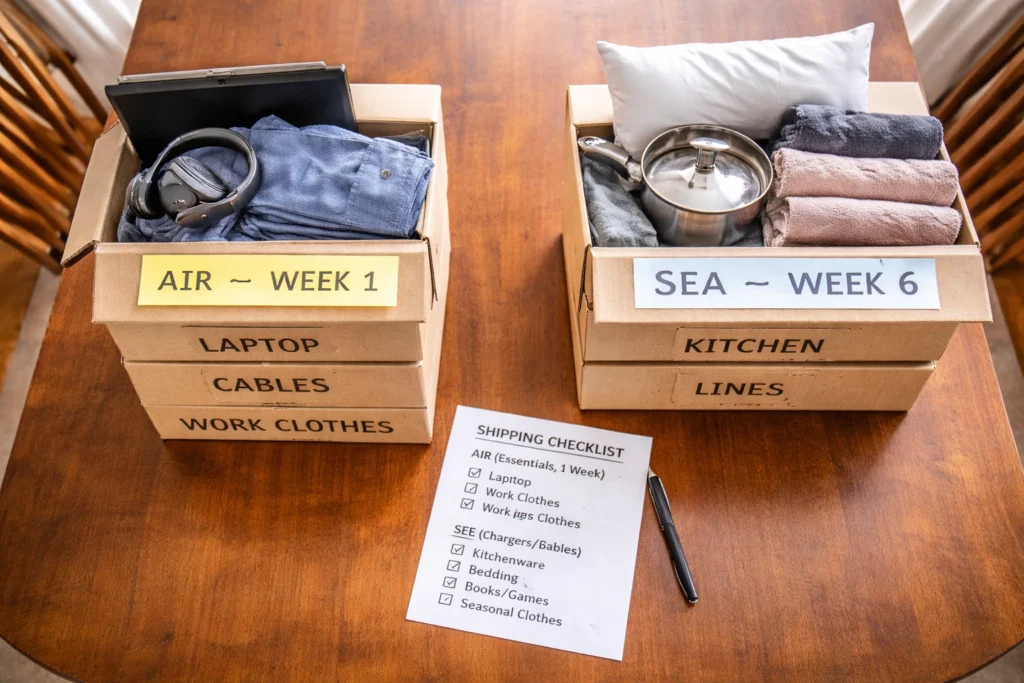
Combining container and air freight lets you get essentials immediately while keeping costs down on your full household shipment. Basically, you can divide your belongings by how quickly you need them, like this:
- Air Freight Your Immediate Needs: Send work clothes, electronics, and everyday essentials by air so you’re functional the week you arrive. This way, you avoid living out of a suitcase or buying temporary items while waiting months for your container.
- Container Ship Everything Else: Furniture, kitchenware, and bulk household items travel by sea to arrive 4-8 weeks later, once you’ve settled in. These items cost thousands to replace at your destination, but don’t need to be there on day one.
- Coordinate Both Shipments Together: Many international moving companies offer this split service as a package. They coordinate both methods for you, so you’re not juggling two separate logistics providers or tracking systems.
This approach gives you flexibility if your container gets delayed, since you’ve already got the basics you need to work and live comfortably.
Choosing Your International Moving Company’s Shipping Method
Container shipping handles full households affordably in 6-12 weeks, while air freight delivers essentials in 1-3 weeks at a higher cost and limited volume. Your timeline and shipment size determine whether one method works or a combination is best.
When comparing quotes, look for international moving companies that offer both container and air freight. Those with their own global network can manage customs clearance directly, avoiding delays or misplaced shipments by local subcontractors.
At HomePort NorthWest, we’ve helped hundreds of families navigate this exact decision for moves across Australia, Europe, Asia, and North America. Depending on your situation, you might need a full container, a few air-freighted boxes, or a combination of both. We’ll give you transparent quotes and realistic timelines based on your actual move. Contact us today!