
If you’re shipping household goods overseas for the first time, the whole process can feel like a blur. Most guides just throw terms like “customs clearance” and “groupage” at you. And honestly, none of them explain how the stages connect.
Overseas container shipping follows a set sequence, though. Your belongings get professionally packed, loaded into a container, and cleared through Australian customs. From there, everything ships by sea to your destination country. Each stage feeds into the next, and knowing the order makes the whole thing far less stressful.
We at HomePort NorthWest have coordinated international moves for years. That experience has shown us what slows shipments down and how to prevent it. In this guide, we’ll break down each stage of the shipping process so you know exactly what to expect.
If you’re still weighing your options, our guide on container shipping vs air freight covers that decision too.
How Overseas Container Shipping Works: From Start to Finish
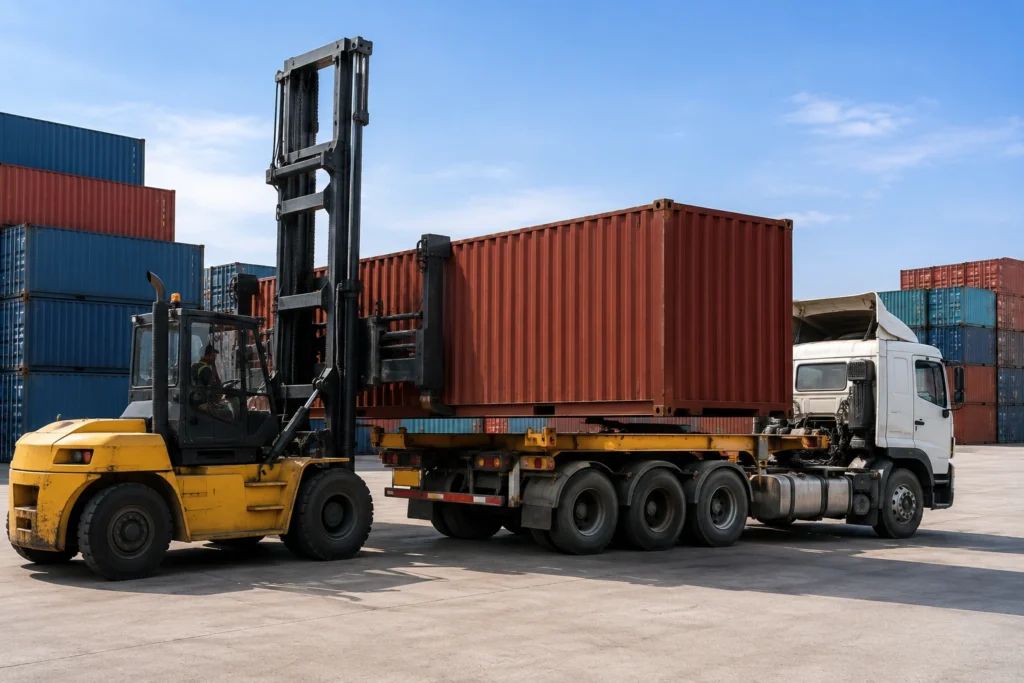
The shipping process starts with a site inspection. Your removals company will visit your home to assess how much furniture, boxes, and belongings need to go into the container. Based on that assessment, they’ll book the right container size and lock in a pickup date.
On packing day, a professional team wraps and loads everything into the container at your door. Once the container is full, it heads to the nearest port. Australian customs officers then review your documentation and clear the shipment for international transit.
From there, your container boards a vessel and begins the ocean crossing. A shipment to the United Kingdom, for example, usually takes around 6 to 8 weeks by sea. Moves to parts of Asia or the Middle East can arrive in as little as 3 to 4 weeks, depending on the route and how many port stops sit along the way.
Now that you know the overall timeline, let’s look at the container itself.
Choosing the Right Shipping Container for Your Move
Most people assume they’ll need a full shipping container (you’d be surprised how many people overestimate what they’re shipping).
But for the most part, your container choice comes down to how much furniture and how many boxes you’re moving. Here’s a quick breakdown:
| Container Type | Best For | Approx. Volume |
| 20ft full container | 1–2 bedroom home | ~30 cubic metres |
| 40ft full container | 3+ bedroom home | ~60 cubic metres |
| Shared container (groupage) | Smaller loads | You pay per cubic metre |
If you don’t have enough belongings to fill a full container, groupage lets you share space with other shipments on the same vessel. You only pay for the cubic metres your boxes and furniture actually occupy.
And honestly, for most people handling a 1–2 bedroom relocation, groupage is the smarter call. It also means your international move won’t stall while a shipping line waits to fill the rest of the container.
Once you’ve locked in your container size, the next step is packing.
What Professional Packing Services Handle Before Your Container Load

A professional packing service covers both the physical protection of your belongings and the customs documentation your shipment needs. And from our experience, the individual inventory list causes more hold-ups than the packing itself.
Your packing team will cover three main areas before the container leaves.
- Wrapping and Protection: Your packing crew wraps furniture in protective blankets and seals fragile items using specialist packing materials. Each piece gets labelled so it matches the inventory required at customs.
- Customs Inventory: The team records every item going into the container along with its declared value. Customs officers in Australia and your destination country both review this document before clearing the shipment.
- Packing Timeframes: A standard 3-bedroom home usually takes one full day to pack. Larger households with more furniture and boxes can stretch into a second day (from what we’ve seen, it depends on how much needs dismantling).
Getting the documentation right at this stage prevents your shipment from stalling at port.
Dangerous Goods and What You Can’t Ship
Certain household items can’t go inside a shipping container under international safety and biosecurity rules. Flammable products like aerosols, paints, and gas bottles fall into this category. The same goes for perishable food, live plants, and prescription medications that aren’t approved for import in your destination country.
So, before packing day, it’s worth checking what your destination allows. Australia’s Department of Agriculture, Fisheries and Forestry publishes a full list of requirements for anyone shipping belongings to or from the country. You can also use the BICON import conditions system to search by product type.
And no, customs won’t give you a second chance on any of these. If a restricted item turns up during a container inspection, officers can hold your entire shipment. Your removals company should provide a dangerous goods checklist early so you aren’t caught off guard.
How International Shipping and Customs Clearance Work

Customs clearance happens twice during an international move. Your shipment passes through export processing in Australia first, then import processing at the destination. We’ve processed shipments into dozens of countries, and the specific requirements change every time.
Two areas of paperwork require your attention:
What Documents You’ll Need
Your documentation will include a detailed packing list, passport copies, visa proof, and a valued inventory of everything in the container. The Australian Border Force requires export declarations for all household goods leaving the country (one missing form can stall your entire shipment at port).
Import Duties and Country-Specific Rules
Some destinations charge import duties on household goods. The United Kingdom, for example, may apply fees on certain items depending on how long you’ve owned them.
Parts of the Middle East and Asia also enforce strict quarantine rules for wooden furniture and outdoor equipment. Your international removals company should flag these costs before your shipment leaves Australia.
Shipping Costs and What Affects Your Final Quote

Your shipping quote comes down to four things: volume, destination, container type, and packing services. Each one shifts the price in a different direction.
To give you a rough idea, a full container relocation from Sydney to London might range between $3,500 and $8,000. A shared container on the same route costs less, but the transit time stretches while the shipping line consolidates other shipments.
Frankly, the base quote rarely tells the whole story. Insurance cover, port handling fees, and quarantine inspections can each add a few hundred dollars to what you pay (quarantine fees alone have caught a few of our clients off guard).
Pro Tip: Always ask your removals company for a complete breakdown, so you’re comparing total costs across overseas moves, instead of just the shipping price.
After your container clears customs at the destination port, the final delivery stage begins.
Final Delivery and What Happens When Your Container Arrives
A local transport crew will pick up the container and bring it to your new address. The team will then unload your furniture, boxes, and belongings into the rooms you specify.
For most moves, the unloading wraps up in a single day. Yet, if you’ve relocated to a regional area far from the major cities, your container may need an extra transport leg from the nearest port. Your international moving company should confirm this during the booking so you can plan your first week in the new country around it.
Some relocation services also offer unpacking and assembly as part of the delivery. If you’d rather not deal with dozens of boxes on your first night abroad, it’s worth asking about.
Why Work With an International Removals Company
Instead of coordinating between packers, shipping lines, customs brokers, and delivery crews on your own, an international removals company brings all of it under one service. You deal with one point of contact, one schedule, and one team responsible for the entire relocation.
At HomePort NorthWest, our expert team has handled overseas moves across dozens of countries. We know what each destination requires, and we keep every customer updated from container pickup in Australia through to final delivery abroad.
If you’re planning an international move and want support from a team with local expertise, get in touch for a free quote.