
An overseas move is hectic enough without making your first few hours at your new home harder than they need to be. One of the best ways to keep things manageable is to know which box to pack last and which one to open first.
And if you’re not sure which box that is, don’t worry. We’ll walk you through what to pack, how to label it, and what to expect once your shipment clears customs. You’ll also see when a trained crew beats doing it yourself. Let’s dive deep into the discussion.
The First-Night Essentials Box Is the One You Pack Last
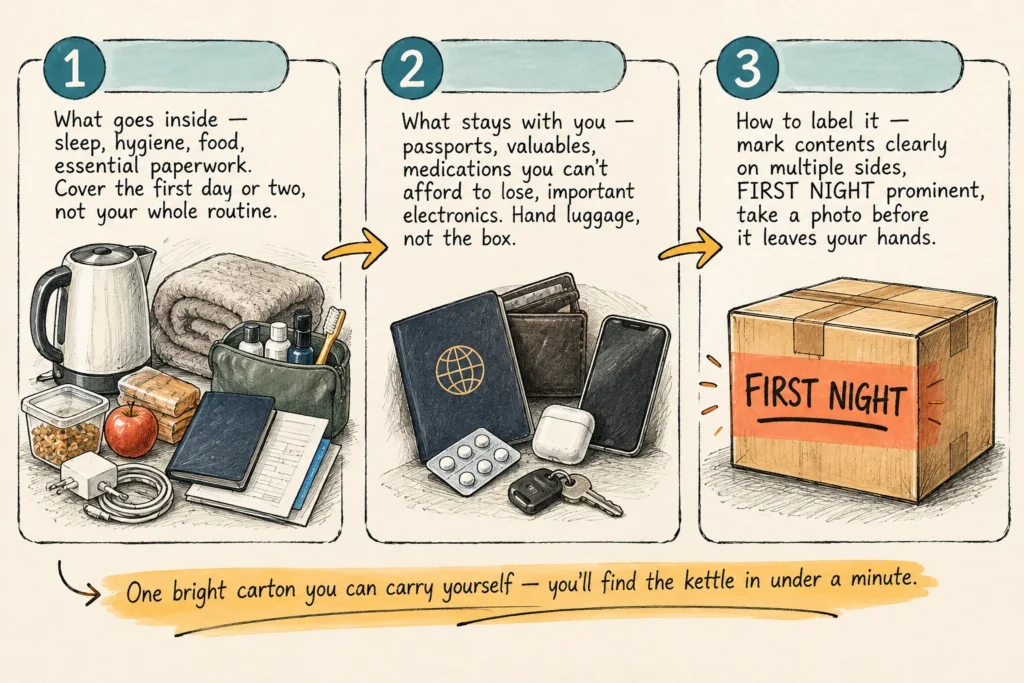
The first-night essentials box is the one you pack last and open first when you arrive. It keeps the basics you need close at hand while the rest of your belongings are still in transit. To make the box useful, you need to get three things right: what goes inside it, what stays with you instead, and how you make the box easy to find.
1. What Goes Into Your First-Night Box?
Your first-night box should cover the basics you’ll need for sleep, hygiene, food and essential paperwork. Bedding, towels, a kettle, tea bags and any medication you need immediately are more useful here than almost anything else in the shipment.
Don’t try to squeeze your whole routine into one carton. The aim is to cover your first day or two until you can access the rest of your belongings.
Our crews tell every family the same thing. Pack that kit into one bright carton you can carry yourself, and you’ll feel like a genius when you find the kettle in under a minute.
2. Keep Your Other Essentials Close at Hand
Not everything you need immediately should go into the first-night box. Passports, travel documents, valuables, medications you cannot afford to lose, and important electronics are better kept in your personal luggage or hand luggage.
The same principle applies to your overseas moving checklist. Sort everything else into what you’ll ship, store, sell, or donate, and keep an inventory as you go.
3. Label the Box So You Can Find It
An unmarked box can disappear into a stack of identical cartons as soon as loading begins. Mark the contents clearly on multiple sides using a thick, easy-to-read label, and make FIRST NIGHT prominent enough to spot at a glance.
Take a photo of the finished box before it leaves your hands, too. If someone else handles your belongings during loading or delivery, they’ll know which carton needs to stay accessible.
Moving Overseas Packing: What Should You Pack in This Box?
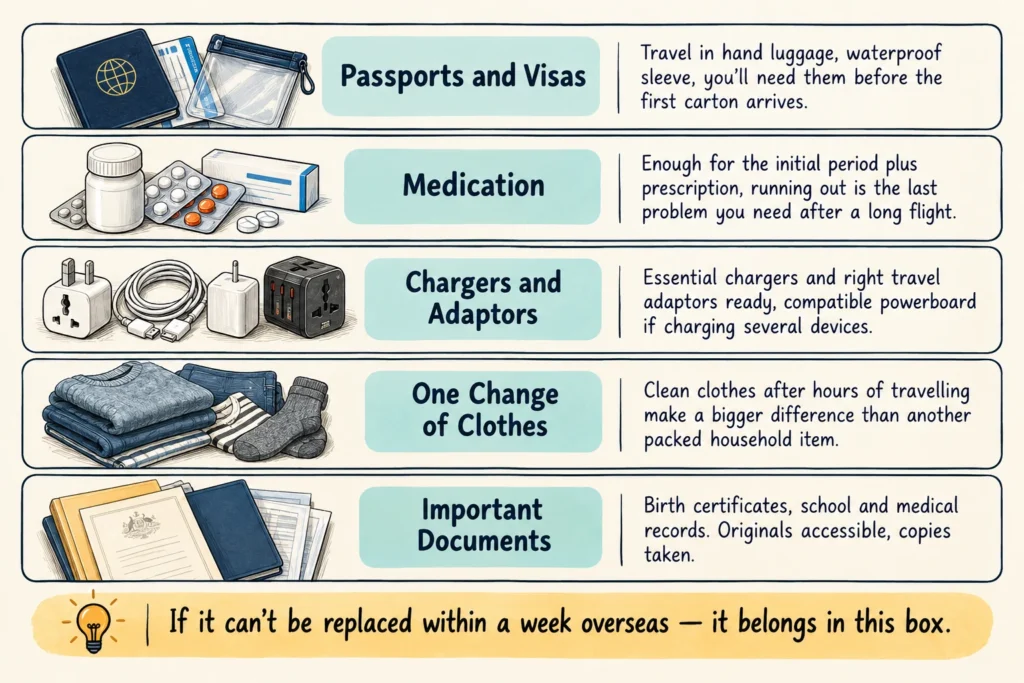
Think of this as the box that gets you through the awkward gap between “we’ve arrived” and “we’ve got our stuff.” It should contain the essentials you’ll need immediately, while anything irreplaceable stays safely with you.
Before sealing it, make sure you’ve covered these basics:
- Passports and Visas: Your passports, visa documents and boarding passes should travel in your hand luggage, ideally together in a waterproof sleeve. You may need them long before the first carton reaches your new home.
- Medication: Running out of regular medication is the last problem you want after a long flight. Bring enough for the initial period, along with your prescription and any medical documents you may need.
- Chargers and Adaptors: Dead phones become a nuisance quickly when you’re navigating an unfamiliar country. Have your essential chargers and the right travel adaptors ready, with a compatible powerboard if you’ll need to charge several devices.
- One Change of Clothes: After hours of travelling, clean clothes can make a bigger difference than another carefully packed household item. Choose something suitable for the weather you’ll encounter when you arrive.
- Important Documents: Birth certificates, school records, medical records and insurance papers can be difficult to replace from overseas. Keep the originals you need accessible and take copies where appropriate.
The rule is simple: If an item can’t be replaced within a week overseas, it belongs in this carton rather than the container.
Choosing Between DIY International Moving Boxes and International Removalists
Now that you know what needs to stay within reach, there’s another decision to make: how much of the packing should you handle yourself?
You have two main options. You can buy the cartons, pack your belongings and manage the details yourself, or bring in an international removalist to handle some or all of the work. The right choice depends on your budget, the items you’re shipping and how much of the process you want to manage.
Here’s how the two approaches compare:
| Factor | DIY international moving boxes | Professional overseas removals |
|---|---|---|
| Cost | Cheapest upfront; you buy cartons and tape | Higher fee, includes professional packing and materials |
| Fragile items | You take responsibility for protecting glass, screens and other breakables. | Trained movers handle packing and protection for fragile items. |
| Paperwork | You handle the required customs and shipping paperwork yourself. | The removalist can handle or assist with international shipping documentation. |
Rather than treating one option as automatically better, match the approach to what you’re comfortable handling. DIY packing can make sense for sturdy everyday belongings, while fragile or difficult-to-pack items may be better left to an experienced crew.
What Happens Between Landing and Delivery?
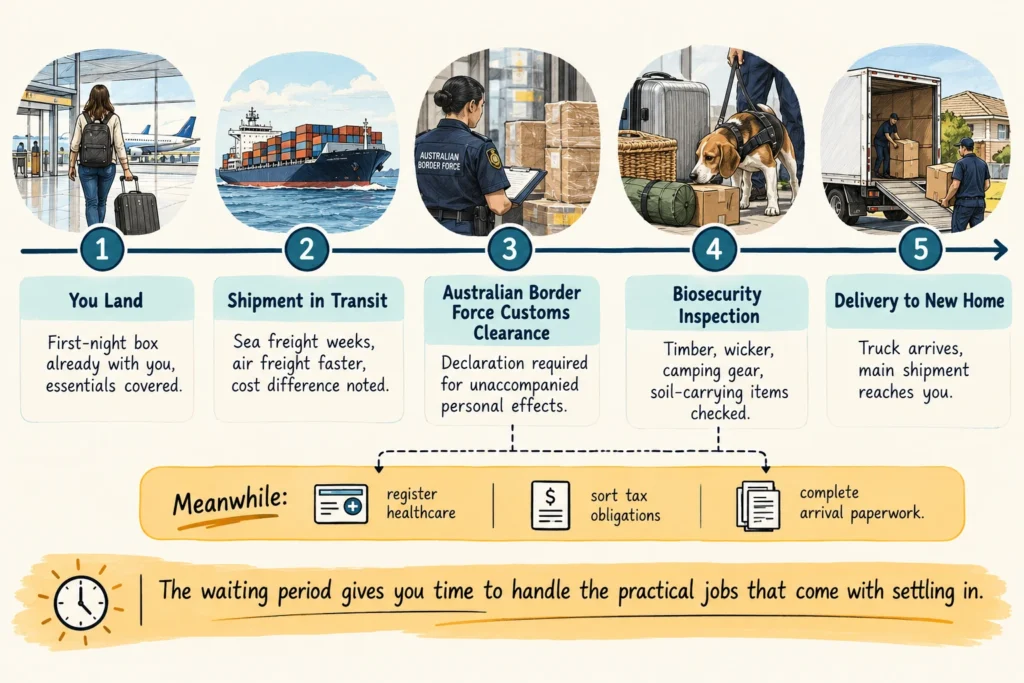
Your first-night box solves one immediate problem: getting through the first few days without the rest of your belongings. Your main shipment, meanwhile, may still be travelling to Australia or waiting for clearance before it can reach your new home.
How long you wait depends partly on how your belongings travel. Sea freight usually takes longer, while air freight gets your belongings there faster but typically costs more. Once the shipment reaches Australia, it must clear customs and may need to undergo biosecurity checks before delivery can go ahead.
And if you’re bringing unaccompanied personal effects into Australia, you’ll need to follow Australian Border Force requirements, including the relevant customs declaration. Biosecurity officers may also inspect timber, wicker, camping equipment and items carrying soil.
That waiting period gives you time to deal with the practical jobs that come with settling in. You might need to register for local healthcare, sort out your tax obligations and complete other arrival-related paperwork while your belongings are still in transit.
Eventually, your shipment clears the necessary checks, and a truck brings your boxes to your new home. By then, your first-night box has already done its job: you’ve had access to the essentials while the rest of your belongings made their way to you.
Pack That Box Last, Land Stress-Free
By now, you know why that first-night box deserves special attention. It keeps your essentials within reach while the rest of your belongings are still in transit. You won’t have to search through every carton for a toothbrush, clean clothes, or your medication.
Pack it last, label it clearly, and keep it accessible throughout the move. The rest of your shipment can take its time getting there.
If you’d rather leave the packing, handling, and logistics to a professional crew, Homeport Northwest plans international moves for families and professionals heading overseas. Contact us for a tailored quote for your move.