
When moving abroad, you can usually ship household goods, clothing, and many personal belongings. However, every country restricts or prohibits certain items, which depend on what you’re sending and where you’re going.
Fortunately, most people ship abroad without any major hiccups. You just need to know the rules before you box everything up. And trust us, a shipment stuck in customs overseas is not a fun situation to be in (storage fees alone can run $400 or more).
In this guide, we’ll walk you through international shipping rules in detail. You’ll learn about permitted items, common restrictions, and country-specific exceptions that can affect your shipment.
Let’s get into it.
What Can You Ship When Moving Abroad?
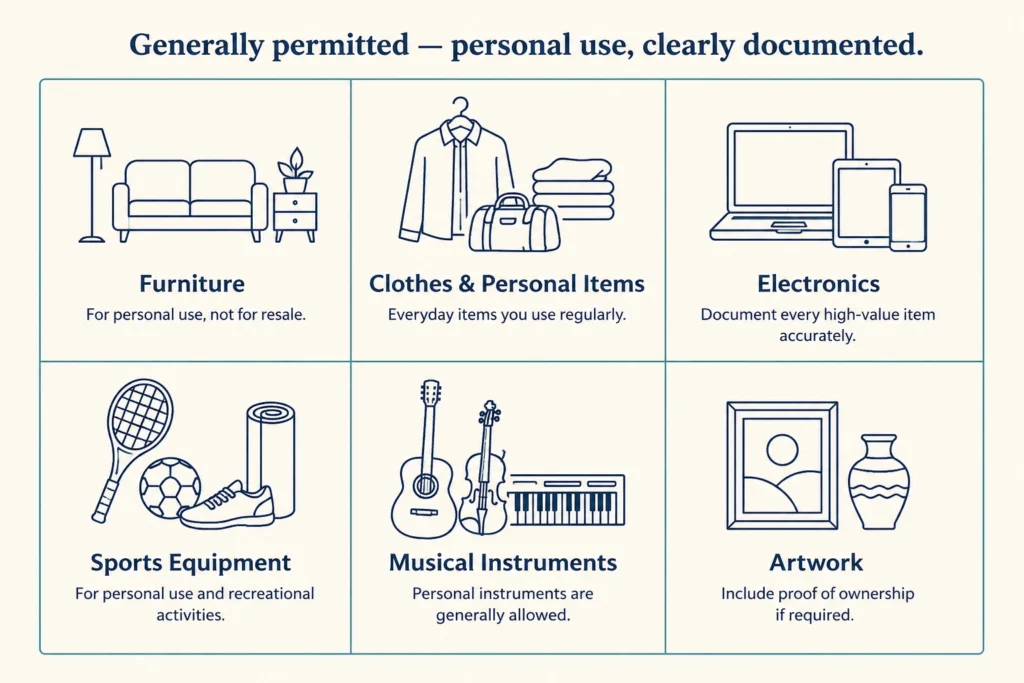
Most of your everyday belongings qualify, as long as they are for personal use and not prohibited by your destination country. Here’s what typically makes the cut:
- Furniture: Sofas, beds, and dining tables ship without issue in most cases. The main thing to sort out is volume, since most international moves are priced by cubic metre or weight.
- Clothes and Personal Items: These are fine to pack. Just make sure everything is clean and free of soil or residue, as some countries will reject items that show signs of dirt or organic material.
- Electronics: Laptops, TVs, and kitchen appliances are all shippable. That said, customs officers in many countries may cross-check high-value electronics against your inventory. So make sure every item is accurately listed and documented.
- Sports and Outdoor Equipment: If you’re a gym-goer, a cyclist, or someone who lives for weekend camping trips, it can all come with you. For bikes specifically, deflate the tyres and disassemble them beforehand to save space and avoid damage in transit.
- Musical Instruments and Artwork: Guitars, violins, paintings, and similar items ship fine, but don’t skimp on the packing. One bad bump in transit and your guitar neck is in two pieces.
If your items are for personal use and clearly listed in your inventory, you are in good shape. Most shipments clear customs without any drama.
What You Cannot Ship: Banned and Restricted Items
Some items are off-limits entirely, and others are restricted depending on where you’re moving. Ship the wrong thing, and you’re looking at fines, a held shipment, or items destroyed at your expense. The two categories below cover where most shipments run into trouble:
Weapons, Chemicals, and Controlled Substances
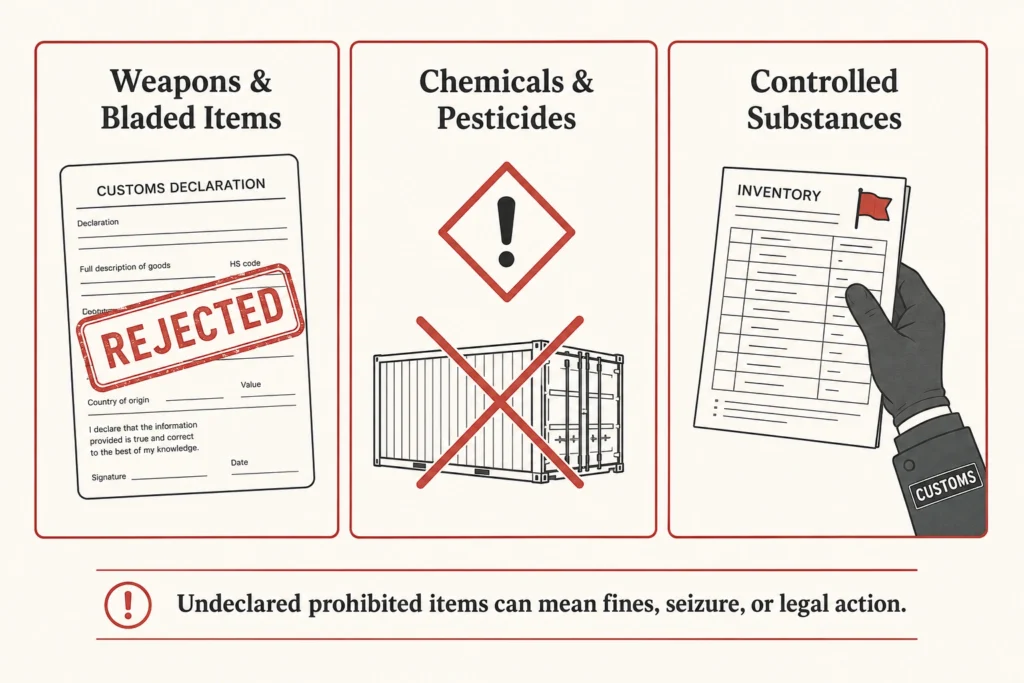
Firearms, ammunition, and bladed weapons are prohibited across virtually all international shipments. If you do need to bring them, you’ll need specific import permits from your destination country before they clear customs. Attempting to ship them undeclared is a criminal offence in most countries and can lead to confiscation, legal action, and serious penalties.
Chemicals are a separate issue, but just as serious. Pesticides, bleach, and mercury-based products are restricted due to the health risks they carry in transit.
Illegal drugs and controlled substances follow the same logic, but with stricter consequences. They’re banned outright, no exceptions, regardless of quantity or personal use.
Lithium Batteries, Aerosols, and Flammable Materials
Most international carriers classify loose lithium batteries as dangerous goods. Their potential to cause fires during transit makes them particularly risky. And because such fires are extremely difficult to contain on cargo vessels, many movers refuse to ship them.
Aerosols fall into the same category for similar reasons. Items like hairspray and deodorant are pressurised containers, and heat or impact during transit can make them just as unpredictable.
Flammable liquids like nail polish, lighter fluid, and paint carry the same risk. Most people don’t realise these everyday items are treated the same way as industrial chemicals until their shipment gets flagged.
Believe it or not, loose lithium batteries and undeclared aerosols are behind more customs holdups than weapons or chemicals. We’ve seen shipments delayed for days over a forgotten can of dry shampoo. They’re easy to overlook, but carriers won’t overlook them for you.
Restricted but Allowed Under Conditions
Not everything is a flat-out no. Some items can travel with your shipment, but only when specific requirements are met. The table below covers what you’ll need to sort before these items can ship:
| Item | Condition to Ship |
| Medications | Must include a doctor’s prescription and a signed customs declaration. Carry enough supplies for the journey separately. |
| Food Items | Commercially sealed and clearly labelled products are generally accepted. Homemade or unsealed food is almost always rejected. |
| Lithium Batteries (in devices) | Batteries installed inside devices are treated differently from loose ones. Check with your carrier for watt-hour limits. |
| Alcohol and Tobacco | Allowed in limited quantities for personal use, but amounts vary by destination country and must be declared at customs. |
| Pets | Require a government-issued health certificate, up-to-date vaccinations, and advance approval from your destination country (yes, even a domestic cat counts). |
| Plants and Seeds | Some are allowed with a phytosanitary certificate. Many are banned outright due to biosecurity risks. |
The requirements for each of these items can change, so always confirm with your moving company before you start packing.
Items You Should Carry Instead of Shipping
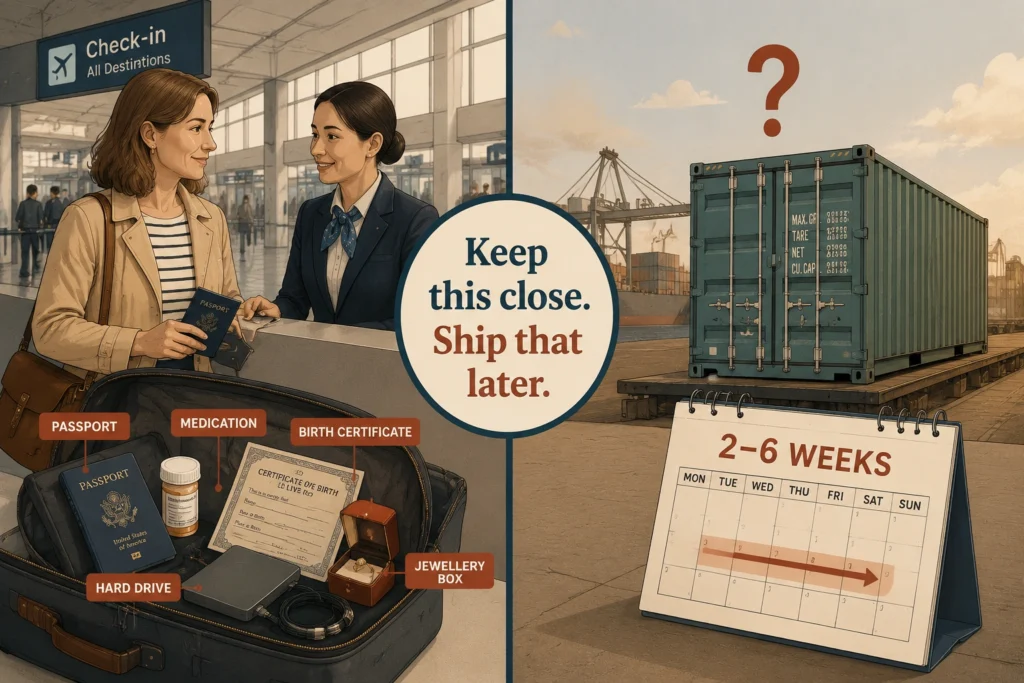
Say your container gets held at customs for two weeks, and your asthma inhaler is somewhere inside it. That’s not a hypothetical situation. It happens. Some items shouldn’t go in your shipment simply because you can’t afford to be without them. Because shipments can take anywhere from 2 to 6 weeks to arrive when moving overseas.
That’s why anything you can’t afford to lose or go without should stay with you. This includes your:
- passports
- visas
- birth certificates
- medical records
- and insurance policies.
Losing access to these while your shipment is on the water makes setting up your new life a lot harder than it needs to be.
Jewellery, family heirlooms, and hard drives are worth keeping close too. Most international removals insurance policies exclude these items from cover, so if something goes missing, you’re on your own.
The same thinking applies to medications. You should keep enough in your carry-on to cover the full journey, plus a few extra days as a buffer. Sorting out a replacement prescription in a new country takes time, which is the last thing you want after landing somewhere unfamiliar.
Do Shipping Rules Change by Country?
Yes. Import rules can vary depending on the destination country.
Take Australia, for instance. It has some of the toughest biosecurity rules in the world. The Australian Department of Agriculture and Water Resources prohibits items containing soil, plant material, or food residue. And the Australian Border Force enforces these restrictions strictly on arrival, which means improperly cleaned items can be seized.
New Zealand takes a similar approach, with its Ministry for Primary Industries providing an item checker to help determine what can be brought in. In other regions, particularly parts of the Middle East, restrictions often extend to alcohol, pork products, and certain printed materials.
Because of these differences, it’s worth reviewing your destination’s import rules well before moving. Ideally, at least four weeks out, so you have enough time to sort any permits or paperwork before your moving date.
How to Prepare Your Shipment Before Moving Day
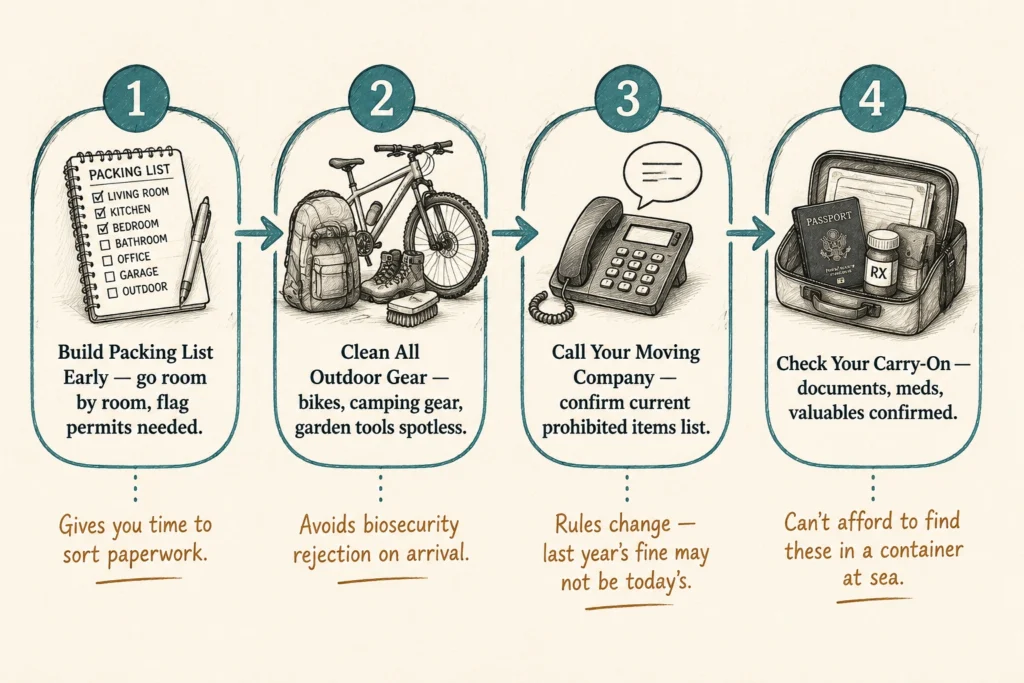
The best way to prepare your shipment is to work through a checklist while you still have time to act on it. These steps are worth doing properly:
- Build Your Packing List Early: Go room by room and write down everything that’s going into the shipment, including anything that might need a permit or special handling. Doing this early gives you enough time to sort out paperwork or swap items out before the truck arrives.
- Clean All Outdoor Gear Thoroughly: Make sure bikes, camping equipment, and garden tools are completely clean before they go into the shipment. As we mentioned, countries like Australia and New Zealand take biosecurity seriously, and a dirty item can land you with quarantine fees or outright rejection on arrival.
- Contact Your Moving Company Early: Ask them directly what they will and won’t accept. Moving companies update their prohibited items lists regularly, so what was fine last year may not be today. It’s a five-minute phone call that can save you a very expensive surprise.
- Double-Check Your Carry-On Bag: When packing in a hurry, essential items like documents, medications, and valuables can easily end up in checked bags. Take a moment to confirm they’re all in your carry-on. This way, you won’t be scrambling to find them when you land.
Moving day is stressful enough without discovering something is missing or held up at customs. Sort this beforehand, and you’ll have one less thing to manage when you arrive.
Your Next Step Before Moving Day
Getting your shipment right is one of the most important things you can sort out before moving day. The effort you put in now is what separates a smooth arrival from a stressful one.
If it all feels overwhelming, start small. Go through your belongings room by room, flag anything on the restricted or prohibited list, and set those items aside before packing begins.
When you’re ready to talk through your shipment, the HomePort NorthWest team is here to help. We’ve helped Australians move to every corner of the world, and we know what it takes to get your belongings to your new home without the headaches.
Get in touch today, and let’s get your shipment sorted the right way.