
Container condensation reaches your belongings when humidity gets trapped inside a shipping container and cools overnight. As the steel walls cool, moisture in the warm air condenses on their surfaces. Water droplets can then drip onto furniture and boxes during an overseas move.
Yet most people arranging overseas removals Australia-wide worry about theft or rough handling. Water never enters the conversation until the doors swing open. At Home Port Northwest, we’ve seen the consequences firsthand. Stained timber and water-spotted cartons arrive after voyages that appeared trouble-free on paper.
To prevent that, this guide explains:
- What drives shipping container condensation
- How to pack against it
- Which container suits your route
Let’s get into it.
Shipping Containers Sweat More Than You Think on an Overseas Move
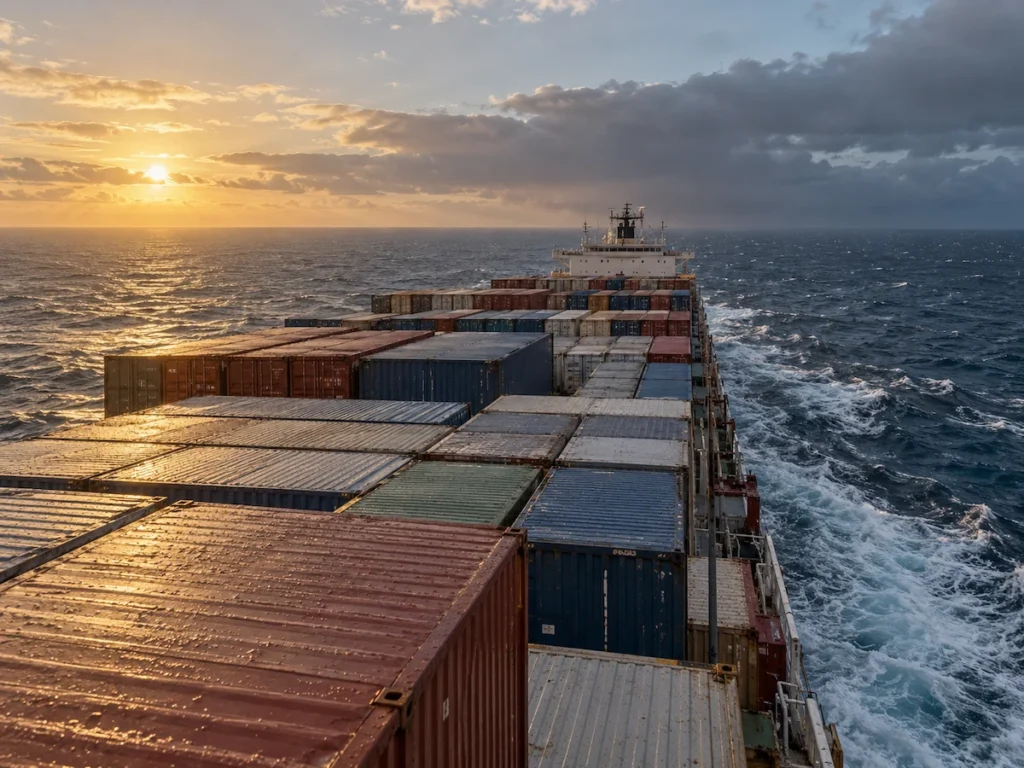
Most people packing for an overseas move never think about water forming inside a sealed steel box. But international container shipping carries your goods through tropical afternoons and cold nights. Those weather conditions shift every day, and the daily swing does the damage.
Three things explain where the water comes from, how the voyage makes it worse, and what a wet container looks like on arrival.
What Causes Condensation Inside a Sealed Container?
Condensation forms when warm, damp air meets steel walls that have cooled below the dew point. This is the temperature at which air can no longer hold its moisture as vapour. As the moisture condenses on the steel ceiling, water droplets collect and eventually drip onto belongings below.
Your own belongings supply most of that moisture, because timber furniture, cardboard cartons and folded fabric all carry water you can’t see or feel. That said, one damp lounge suite releases several litres across a long voyage (we’ve weighed a few of these before and after shipment).
Because the doors stay shut for weeks, none of that vapour finds a way out of the box. So it cycles between the air and the steel, which wets your items a little more each night.
The Long Sea Voyage and Its Daily Temperature Swings
During a long sea voyage, shipping containers experience repeated temperature changes as vessels travel through different climates. For example, a container travelling between Fremantle and the United Kingdom may encounter warm tropical days and cooler nights. These changes can cause moisture to condense on the steel walls and ceiling.
Each warm-and-cool swing runs the same cycle, with the air collecting moisture through the heat of the day and dropping it back as water overnight. Similar condensation can appear inside a car parked overnight in humid Perth weather, leaving the windows damp by morning.
Specifically, containers riding on the top deck cop the worst of it, since sun and salt air hit them from every side. The longer the voyage, the more often these containers may experience temperature changes. This way, each cycle creates another opportunity for condensation to form inside.
Reading the Signs of a Wet Container Before You Open It
Before the container delivery truck pulls away from your driveway, the outside of the box already gives you clues of being wet. Besides, rust streaks under the door seals and a musty smell at the vents both suggest water has been sitting inside for weeks.
Once you open the doors of the boxes, look up before you look down, because droplets on the ceiling and dark patches across carton tops can indicate condensation damage. Curled labels and soft corners further confirm signs that moisture has reached your belongings.
Don’t forget to photograph anything that looks suspicious before you unload a single box, since claims move quickly with pictures as proof (insurers ask for them every single time). After opening thousands of these containers ourselves over the years, we can tell you the ceiling shows damage long before the floor does.
Protect Furniture Shipping and Your Items From Moisture During Delivery
With that foundation in place, a few simple steps protect your goods from pickup to delivery. None of them cost much, and each one takes water out of the equation before the doors close.
Work through these while you pack instead of after the truck turns up:
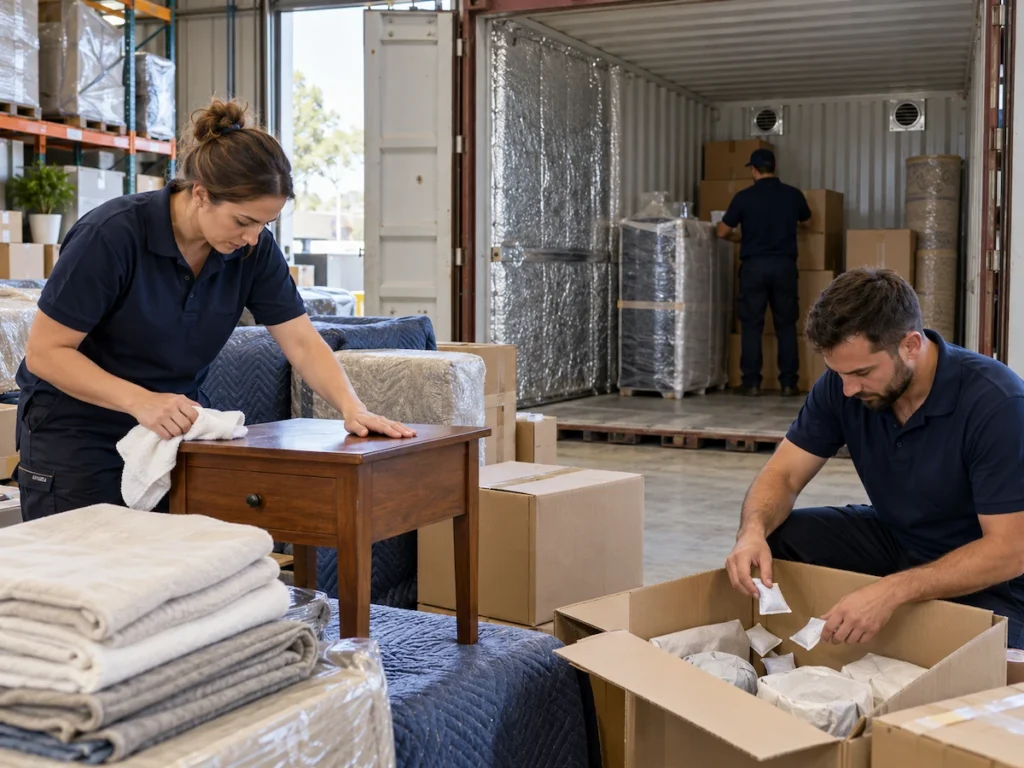
- Dry Items Before Packing: Damp cushions, unwashed linen and freshly mopped timber keep releasing vapour for days afterwards. That’s why keep them for 48 hours in a dry room, then slip packing paper between folded linen before they go near the container.
- Desiccant Poles and Sachets: Hang two or three desiccant poles from the lashing rings and tuck silica gel sachets inside drawers and wardrobes. Each pole can pull several litres of water out of the air across a long crossing.
- Breathable Wrapping Only: Bubble wrap protects corners well, though sealed plastic wrap traps moisture against polished surfaces for the whole voyage. Plus, furniture blankets and cotton sheets over the top let timber breathe while you secure furniture for the road.
- Strap and Cushion the Load: Ropes and tie-down straps hold the stack still, so nothing rubs through its wrapping at sea. Next, fill any remaining gaps with cushioning materials and seal the carton seams with packing tape to help protect its contents.
- Airflow Around Heavy Items: Leaving a 50 mm gap between the walls and your stack keeps air moving instead of sitting still. At the same time, spread the weight evenly throughout the container, and slide pallets under heavy items to lift cartons clear of any water that reaches the floor.
Although no single step offers complete protection, securing, cushioning, and wrapping your belongings can reduce the risk of damage. So, spending an afternoon preparing everything carefully can help your furniture arrive in good condition.

Now that you understand the moisture risks, choosing the right container hire makes sense.
Storage Container Hire and Used Shipping Containers: Comparing Your Options
Shipping container hire across Australia runs from cheap older boxes through to newer units, and age, size and ventilation all change how much water ends up inside.
Beyond these factors, consider how you’ll use the container. This is because a unit sitting in a storage yard faces different conditions from one travelling overseas. For instance, relocation shipping containers need sound door seals to limit rainwater entry and prevent outside moisture from entering through gaps.
So match these three common options below against your load and your sailing distance.
| Option | Best for | Moisture risk |
|---|---|---|
| 20ft standard containers | Two-bedroom loads, an interstate move | Moderate, vents only |
| 40ft high cube containers | Full houses, moving overseas | Higher, more air volume |
| Used shipping containers | Budget storage needs, short hops | Highest, check seals and rust |
Quick Tip: For sea voyages lasting a month or longer, choose a container with working vents, intact door seals, and no signs of rust or previous water damage. These features help limit moisture buildup and water entry during the journey.
How Do You Prevent Moisture Damage on Overseas Removals Australia-Wide?
You prevent moisture damage when moving from overseas by:
- Drying items fully
- Using silica gel
- Choosing a well-vented or insulated container hire
These three steps address the three sources of water: your belongings, trapped air, and the steel itself.
Beyond the packing, timing counts when people start booking. For example, arranging international shipping outside the summer wet season cuts the humidity your goods start with. Plus, it may help avoid weather-related delays at the departure port in Australia and the destination port overseas.
Pro Tip: Overseas moving in autumn or spring gives you the driest start of all.
Many freight services quote domestic and international routes without mentioning ventilation, so ask them yourself before you sign anything. For context, a vented moving container costs a little more than a plain box, and it beats replacing a dining table (a repair quote we’d rather you never see).
Some yards also list shipping containers for sale beside their hire fleet. In that case, buying only pays off when you’ll keep using the box long after the move ends.
Once you choose the right container, keep an eye on what happens at the far end of the journey. Remember, if you leave goods in container storage for weeks after arrival, they sweat just as badly as they did at sea, especially through a northern winter.
Keep Your Belongings Dry From Departure to Delivery
Water inside a sealed steel container can cause serious damage to belongings during international shipping. Over several weeks at sea, repeated temperature changes can cause condensation to collect on the walls and ceiling. Dry packing and honest ventilation prevent nearly all of such issues.
Start your preparation early, because timber and fabric both need days to give up the moisture they hold. Plus, book your container as soon as you know your volume and your sailing date.
Ready to ship dry? Home Port Northwest supplies vented container solutions and container services for families moving overseas from Australia. Contact us for a quote on your move.